Saturday, August 26, 2017

Rock-Paper-Scissors.. GO!

Rock, Paper, Scissors (R-P-S), has been around for centuries, possibly as far back as 200 BC. Every country, on every continent, has its own variation, but it's still basically the same game with the same rules. In a pinch, whether because you don't have dice or are playing in a car, R-P-S can be a fun and convenient way of deciding a gaming outcome. Yes, I'm aware that there are dice rolling apps for your phone, but you can't use your phone while driving, and sometimes you're trying to save those last precious few % of your dying battery.


Basic Rules - As If You Didn't Already Know.

One player counts out loud.. 1.. 2.. 3! and both players then "throw" out their chosen hand gesture.
  • Rock (Solid Fist) beats (crushes) Scissors
  • Paper (Flat Hand) beats (covers) Rock
  • Scissors (Two Fingers) beats (cuts) Paper


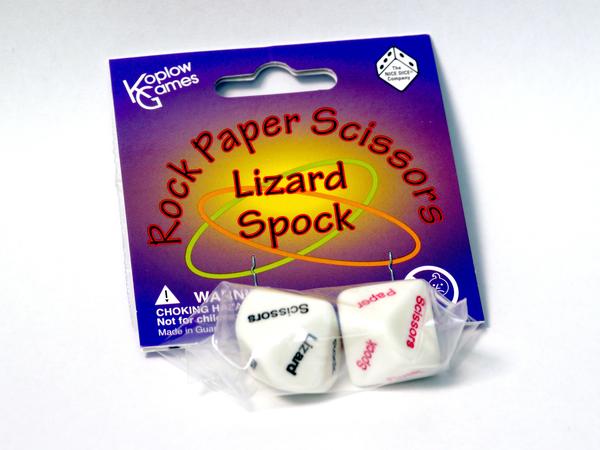
However, just as you can use R-P-S instead of dice, now you can use dice to substitute for hand gestures. Several manufacturers make Rock-Paper-Scissor dice, from d3, d6, to d12. 

They also make d10 dice for the Rock-Paper-Scissor-Lizard-Spock variation of the game.

And, of course, you've always got this guy.


Rock-Paper-Scissors on Wikipedia.

Thursday, August 17, 2017

The Classic Dungeon Designer Series

A few years ago, I came across a set of four PDF files, the Classic Dungeon Designer's Netbooks, written by B. Scot "Kellri" Hoover. They were written for use with 1st edition Advanced Dungeons & Dragons, but are also largely compatible with any OSR rules based on that system.


#1 Monster Stat Block Reference is a compilation of stat blocks for monsters appearing in the game. They make finding essential combat information easier to reference without having to pull out all the Monster Manuals and Fiend Folio. Very handy.

#2 Spells Reference is a comprehensive list of all magic-user, illusionist, cleric, and druid spells published for AD&D, and includes notes and commentaries.

#3 Geomorphs provides a set of 60 basic geomorphs to help give the DM a quick way to map an unexpected cave, cavern system, collapsed ruin, or dungeon, that the players might find. Simple and easy to use.

#4 Encounters Reference is the crown jewel of the set. The book is so full of useful information, that a quick description wouldn't do it justice. It talks about, and expands upon, everything the Dungeon Master may need when creating encounters..

Chapter I: Men
  • NPC Assortments by Class (Clerics, Druids, Fighters, Paladins, Rangers, Magic-Users, Illusionists,Thieves, Assassins, Multi-Classed NPCs, Bards, Monks, Sages, 1st and O-level NPCs)
  • NPC Details
  • NPC Experience & Progression
  • NPC Boons & Hinderances
  • NPC Motivations
  • Dealing with NPCs
  • Hirelings
  • Standard Human Types (Bandits & Brigands, Berserkers, Border Patrols, Buccaneers & Pirates, Cavemen,Caravans, Dervishes & Nomads, Tribesmen, Guards & Watchmen,Pilgrims)
  • NPC Adventuring Parties
  • Spellbook Assortments (1st-18th+ Levels)


Chapter II: Demi-humans & Humanoids
  • Humanoid Ability Scores
  • Tribal Spellcasters
  • Humanoid Groups (Bugbears, Centaurs, Gnolls, Goblins, Hobgoblins, Kobolds, Lizardmen, Locathah, Ogres, Orcs, Sahuagin, Troglodytes, Trolls, Xvarts)
  • Demi-human Groups (Dwarves, Elves, Gnomes, Halflings, Mermen, Tritons)


Chapter III: The Underworld
  • Dungeon & Cavern Mapping Symbols
  • Wandering Monster Encounters (Dungeon Levels I~IX)
  • Dungeons
  • Doors & Locks
  • Gaols & Prisons
  • Ruins
  • Graves & Tombs
  • Caverns
  • Mines
  • Tricks & Traps
  • Animated Statues
  • Quests & Geases


Chapter IV: The Wilderness
  • Terrain by Hex
  • Weather
  • Random Encounters
  • Random Encounters by Terrain Type (Arctic, Sub-Arctic, Temperate, Tropical)
  • Dealing with Dragons
  • Encounters at Sea (Freshwater, Saltwater)
  • Extra-Planar Encounters
  • On the Road
  • Living Off the Land
  • Castles
  • Druidic Places


Chapter V: Settlements & Civilizations
  • Settlements
  • Inns & Taverns
  • Markets & Bazaars
  • Schools & Training Halls
  • Shops & Structures
  • Shrines & Temples
  • Underworld Guilds


Chapter VI: Treasures
  • Treasure Assortments by Level (Dungeon Levels I~IX)
  • Treasure Assortments by Type(Types A~Y)
  • Maps
  • Miscellaneous Treasures
  • Literature
  • Quick & Weird Magic Items


Chapter VII: The Campaign
  • Adventure Design
  • Friends & Foes
  • Exotic Times & Places
  • Deities & Demigods
  • Arcane Magic


Chapter VIII: Forms & Appendices
  • Appendix A Dice Conventions & Ranges
  • Appendix B Bibliography & Sources
  • Record Forms


Classic Dungeon Designer's Netbooks: (Good as of Aug 17,2017)
  1. Monster Stat Block Reference - CDD #1
  2. Spells Reference - CDD #2
  3. Geomorphs - CDD #3
  4. Encounters Reference - CDD #4
While you're at it, check out Kellri's blog, All Killer - No Filler. He has a lot of excellent material and more downloadable goodies than you can shake a Wand of Wonder at.

Friday, August 11, 2017

Going to the Birds

Duke Edwin Charlton was reknowned for his aviary. It was even said that ever since the Duke could walk that he longed to fly and be amonst the birds. They were a passion of his. A passion that young Nevan shared. The young servant loved to feed the small birds of paradise and the song birds that the Duke kept. But his favorites were the birds of prey that the Duke kept in the Mews. These were the ones that the Duke and his household would use to go hunting. Nevan loved to watch them spread their wings and glide high into the sky, circling and circling as they hunted. The Duke had many birds of prey. There were even some that Nevan could take hunting by himself, as long as he was catching something for the Dukes household to eat. 

He quietly walked amongst the falcons and the hawks, admiring the sharp talons as they sat on their perch, until he came upon the Duke's most prized falcon. It was much larger than the other Falcons and had snowy white feathers. Nevan knew that its plumage made him even more valuable. A pure white bird was the ultimate status symbol. It represented wealth and power. He dreamed of the day that he might be able to hunt with such a bird. With a heavy sigh, he walked over to a smaller hawk. While it wasn't as big, he could still see the powerful wings and sharp talons. He slid the leather glove on his hand and coaxed the bird on to it. The kestrel flapped its wings a few times as it got it balance. He felt the power from the wings and knew that this was still a fierce hunter.

"Come on, you. Lets go find some dinner for His Lordship." He said, as he opened the door and left for the open fields.


Falconry has been around for millennia, in all portions of the globe. It's been in Europe, the deserts, even on the islands of Japan. Until the invention of gunpowder, it was considered the sport of the upper class. So lets take a closer look into Falconry and how it can be applied to your campaigns.

The dictionary defines Falconry as, "The art of training hawks to hunt in cooperation with a person". Not much is known about where the art of Falconry started, but we do know that some of the earliest accounts come from Mesopotamia in roughly 2000 BC. From there we can only guess about how the sport was introduced to the rest of the world, but it spread all over the continents. It's a versatile sport that can fit just about any campaign setting.

While falconry was popular everywhere it went, it was also prohibitively expensive. The birds required special housing, food, and training gear, as well as an experienced trainer. It was because of the costs that Falconry was restricted to the nobility, and their servants, although some priests were allowed to keep falcons to help put food on the table at the monastery. The type of falcon an individual was allowed to use was determined by their social rank. Servants were allowed the smaller hawks, while a king could go hunting with a very large eagle. For creativity sake, you could probably include some mythological birds as well.

There were many birds that could be used for falconry, although not all of them were very practical. Restrictions of which falcons and hawks you could use based on your class. It was considered a crime to keep a bird that was outside your station. The lower classes were allowed kestrels and goshawks, while the upper class and royalty were gyr falcons, merlins, and even birds as big as vultures. The Book of St. Albans, written in 1486, gives a breakdown of what birds could be used and by what social class.


  • Emperor: Eagle, vulture, and merlin
  • King: Gyr falcon and the tercel of the gyr falcon
  • Prince: Falcon gentle and the tercel gentle
  • Duke: Falcon of the loch
  • Earl: Peregrine falcon
  • Baron: Bustard
  • Knight: Sacre and the sacret
  • Esquire: Lanere and the laneret
  • Lady: Marlyon
  • Young man: Hobby
  • Yeoman: Goshawk
  • Poor man: Tercel
  • Priest: Sparrowhawk
  • Holy water clerk: Musket
  • Knave or servant: Kestrel

It should probably be noted that not all types of vultures hunt, so they can't really be used for falconry. The Falcon Gentle, and the Falcon of the loch, are most likely different versions of the Peregrine Falcon. There is some debate about the Bustard. Some think that it might be a Buzzard, which isn't really a bird of prey. Others think that it might be a bird that can't be identified, something of an unknown lineage. The Sacre, or Sakers, were imported from abroad and were unlikely for a knight to have, unless they were wealthy, or had traveled afar.


Most hawks were trained when they were young or from the time they were hatched. It was essential to have a good trainer. They were responsible for teaching it to fly to a persons hand, getting it used to being around humans, and for hunting prey. The birds require constant attention or they become wild and unreliable, so a trainers work is never done. The common tools they used for training were the hood, jesses, bells, and lures. Jesses are the leather straps that go around the ankles and bells were often attached at the ankles so that a falconer could listen and keep track of the falcon.

As the sport grew, a good Falcon became worth it's weight in gold. If the bird was pure white it was worth even more. There are cases in history where falcons were used to pay ransoms or given as diplomatic gifts to improve relations. They were so valuable that laws were put in place to discourage people from harming the birds. Destroying falcon eggs or harming a bird could result in imprisonment. Killing or stealing a bird could result in death. A good falcon was a status symbol and something to be protected. Nobles often traveled with their falcons in order to show them off at grand hunting parties.

All in all, falconry is a pretty easy sport to work in to any campaign setting. The sport died off for a while with the proliferation of firearms, but it's been revived on just about every continent lately. Most people think of it as a sport that is just limited to medieval campaigns, but it can be set to any location. You don't even have to limit yourself to local birds. Falcons and Hawks were often imported, exported, and gifted. You can even introduce fictional ones. Be as creative as you wish. It's sure to add some extra authenticity to any campaign.


Suggested Further Reading:

Falconry on Wikipedia - Here
Ancient & Medieval Falconry: Origins & Functions in Medieval England (Includes terms and vocabulary of the sport) - Here
Falconry in the Middle Ages - Here
Falconry is an Art - PBS - Here


About the Author


Today's article is by our special guest contributor, Rachel Williams. Rachel is a manager at a popular national food franchise, and long-time gamer in both video and table-top media. She is an avid history buff and can often be found glued to the PBS channel and streaming documentaries.. usually far later into the night than she should.

She lives in Upstate New York, with her adorable cat and equally adorable husband (the Editior). 

Friday, August 4, 2017

Audacious Adversaries: The Knights of the Blackbriar (Updated)

The Temptation of Prior Kostan Armbach


Updated August 27th, 2026
New artwork and revised article

Few mercenary bands in the realm carry a reputation as grim, enigmatic, and fiercely effective as the Knights of the Blackbriar. Once formally known as the Benevolent Order of the Revered Blackbriar Priory, this ancient brotherhood has traded its sacred monastic vows for sellsword steel, extortion, and royal intrigue.

Whether encountered as cold-blooded mercenaries guarding a corrupt baron's vault, rival treasure hunters scouring a forbidden tomb, or desperate guardians protecting a horrifying secret, the Blackbriars make formidable, morally complex adversaries for any campaign.

The Fall of the Priory


During the cataclysmic Runic Wars, the Blackbriar Priory was entrusted with a terrible and holy duty: the recovery, quarantine, and safekeeping of malevolent artifacts wrested from the defeated Mages of Astrogoth. These tainted relics—whispered to be gifts from unearthly horrors—warped the minds of ordinary mortals. For decades, the pious knights bore this burden in silence, locking the blasphemies away in subterranean vaults beneath their fortified chapterhouses.

Trouble began when the wars concluded. High church elders and covetous nobles demanded access to the vaults to "verify" the relics' containment. The leader of the Order, Prior Kostan Armbach, flatly refused, decreeing that even a glance at the relics would spread spiritual rot, and that their resting places must remain an eternal secret.

His refusal sparked paranoia and greed. Church factions and rival lords launched a smear campaign, accusing the knights of practicing dark sorcery and worshiping the very idols they had sworn to bury. The crown seized the Order's lands, ransacked their priories, and subjected dozens of knights to brutal, politically rigged inquisitions.

Yet, despite torture and execution, not a single artifact was ever recovered.

The surviving remnant broke their vows and went underground. Over generations, the holy order devolved into a ruthless mercenary company, capitalizing on their dark reputation, military precision, and the terrifying mystique of their lost reliquaries.

Appearance & Tactics


"Nigrae Spini Milites" translation "Knights of the Black Thorn / Blackbriar."


The modern Blackbriar is a grim, disciplined combatant. They favor heavy, utilitarian plate armor deliberately chemically blackened or scarred by battle, worn beneath faded grey or cream-colored surcoats embroidered with the Silver Briar.

  • Cold Discipline: They fight without battle cries, relying on synchronized shield walls, heavy crossbow fire, and brutal flanking maneuvers.

  • The Blackbriar Oaths: While they take gold for their swords, they adhere strictly to a brutal internal code. A Blackbriar never breaks a signed contract—unless a superior contract involves the retrieval of an ancient relic.

  • The Whisper of Corruption: Veteran knights often carry lead-lined lockboxes or iron-banded pouches at their hips, never opened in the presence of outsiders.

D4 Truths: Why Did the Priory Fall? (GM's Choice)


d4The Truth Behind the Legend
1Martyrs of the Secret: The Blackbriars remained pure. They accepted dishonor and exile solely to keep the cataclysmic relics of Astrogoth out of the hands of greedy princes and corrupt pontiffs.
2Rotten to the Core: Prior Armbach fell to the whispers of the relics decades before the trials. The modern mercenary company is merely a front, using sellsword gold to feed dark rituals and restore the Astrogoth dominion.
3Empty Vaults: The artifacts were destroyed centuries ago. The Blackbriars maintain the myth of their dread secret simply to intimidate foes and extort paranoid rulers.
4The Living Curses: The relics were never objects—they were cursed bloodlines. The Blackbriars are sworn to hunt, protect, or eliminate the living heirs of Astrogoth before their power awakens.

D6 Lost Relics of Astrogoth


d6RelicDread Property
1The Crying TorcA twisted collar of black iron that continually weeps bitter oil; silences divine magic within 30 paces.
2The Cinder NailA six-inch bronze spike; driving it into soil renders an acre permanently barren but repels undead entirely.
3The Vitrified HeartA pulsing chunk of obsidian that allows the bearer to speak with dead mages, at the cost of bleeding from the eyes.
4The Shroud of Weeping StarsA moth-eaten silk drape that makes the wearer invisible to extraplanar beings, but draws ravenous beasts.
5The Cleft Bell of AstrogothWhen rung, creates an unnatural vacuum of sound that shatters non-magical glass, crystal, and ceramic.
6The Iron CensusA lead-bound ledger that automatically records the true names of anyone who dies by violence within five leagues.

D6 Adventure Hooks & Encounters


d6Encounter / Hook
1The Toll of Iron: A squad of Blackbriars has seized a crucial river bridge, demanding an exorbitant "relic inspection tithe" on all passing caravans.
2The Broken Tomb: The PCs are clearing an ancient barrow when a Blackbriar strike team breaches the burial chamber from an adjoining tunnel, demanding the party surrender an ornate urn.
3The Inquisitor's Bounty: An elderly prelate hires the party to infiltrate a Blackbriar encampment and steal a ciphered ledger containing the locations of the original sealed vaults.
4Unlikely Allies: Cornered by a terrifying eldritch horror in the deep woods, the PCs are rescued by a silent contingent of Blackbriar veterans wielding heavy incendiary flails.
5The Deserter's Tale: A young Blackbriar mercenary flees to the PCs' tavern, claiming his captain opened an iron reliquary in camp and the entire command staff went mad overnight.
6The Contract Breaker: A local lord hires the party to defend his manor against the Blackbriars—only for the party to discover the lord secretly stole an Astrogoth relic from the knights.


Comments? Complaints? Questions? You can reach us by using our Contact Form in the upper right-hand corner of the page, or post your questions and comments below. We look forward to hearing from our readers.