Showing posts with label OSR. Show all posts

Thursday, July 30, 2026

Adventure Seed: The Tomb of Al Khazneh


The facade and location of the actual tomb reimagined for fantasy gaming. Artwork by Gerald Williams, using AI assisted generation.

Who didn't enjoy Indiana Jones and the Last Crusade? The Temple of the Sun, was actually the Tomb of Al Khazneh, in Petra. Real location for the entrance, but not the same inside as the movie would lead us to believe. Nevertheless, the image of this specific temple facade has stuck in my mind for 37 years, at the time I am writing this. It was very memorable. And I know I'm not the only DM to use the same location for adventures in their campaigns.

In reality, the temple inside isn't a huge grand affair. No multi-levels, no maze of caverns and tunnels. Just a small, straight forward, tomb with areas for sacred rituals. For all intents and purposes, it is the scene of the final showdown and the adventure that focuses on the journey to get to it.


Map based on the actual interior of the tomb. Artwork by Gerald Williams, using AI assisted generation.


Here are a few suggestions for running an adventure centered on a compact, Al-Khazneh-style tomb:

  • Emphasize the Canyon Approach (The Journey): Since the interior is small, treat the narrow gorge leading up to the temple as a major part of the dungeon crawl. Use rockfalls, narrow choking points, sniper ambushes on the high cliffs, and ancient warding glyphs to make reaching the threshold feel like a major achievement.

  • Use the Side Chambers as Ritual/Puzzle Locks: To prevent the party from just rushing straight to the final chamber, tie the main tomb alcove to the side rooms. For instance, the barrier or sarcophagus in the inner sanctum remains sealed until priests' braziers are lit or ancient riddles are solved in the side chambers (b and c).

  • Add Verticality and Lair Actions to the Showdown: Compact floor plans can easily turn into static combat. Give the boss lair actions—such as crumbling pillars, shifting sand traps, animated statues, or magical darkness. Encourage players to use the tall columns or ledge alcoves for high-ground advantages.

  • Time Pressure / Rival Factions: Introduce a race against the clock. A rival adventuring party or cult could be hot on their heels (or already setting up an ambush inside), turning the small space into a high-stakes standoff where cover and tactical positioning matter immensely.


Would you like some specific ideas for traps or lair actions tailored to these individual chambers?

1. The Side Chamber Puzzle Locks

  • The Twin Seals (b and c): The heavy stone doorway leading into the Inner Sanctum (e) is sealed by an ancient Nabataean-style magical barrier. To lower it, the party must simultaneously interact with the altars in the Chamber of Ancient Rites (b) and the Crypt of the Forgotten Kings (c).

  • The Pressure Trap: If an altar is activated incorrectly or out of sequence, the side room's stone doors drop shut, and sand begins pouring rapidly from ceiling grates, filling the room in 3 rounds unless a mechanical or Arcana check resets the mechanism.

2. Lair Actions for the Inner Sanctum (e)

On Initiative Count 20 (losing initiative ties), the guardian or tomb spirit can channel the structure itself:

  • Sifting Sands: Loose sand across the floor swirls violently. The main chamber floor becomes difficult terrain, and any creature standing on it must succeed on a Strength saving throw or be knocked prone or pulled 10 feet toward the center of the room.

  • Echoes of the Ancients: The ancient carvings along the walls glow with searing radiant or necrotic energy. Energy beams fire across the room between the pillars in (a) or along the walls of (e), forcing players to actively use line-of-sight and cover behind the central pillars.

  • Structural Collapse: A piece of the high carved ceiling detaches above a 10-foot-square area. Creatures in the area must make a Dexterity saving throw or take bludgeoning damage and become restrained under falling masonry.
  • Treasury Secrets (d): Hidden behind a secret door, painted with a mural, is the treasure vault. Add any traps, or puzzles on how to open it as you please.

3. The Final Vault Trap (i)

The left and right priest antechambers (g and h) are explicitly priest antechambers, so their encounters are directly tailored to the daily rites, preparations, and duties of the tomb's clergy:


1. Purification and Preparation (g)

  • The Ritual Basin: This room contains a stone basin once used by priests for ceremonial washing before entering the Inner Sanctum (e).

  • The Hazard / Challenge: The basin holds murky, stagnant water infused with ancient holy oils—or a trapped Water Elemental / Ooze lying in wait.

  • The Mechanic: To open the door to (e) safely, a character must perform the proper ritual purification (a Religion check or casting a cleansing spell like Purify Food and Drink). Failing to purify oneself triggers a curse of frail body (disadvantage on Strength/Constitution saves) upon stepping into the central hall.

2. The Vestry and Sacred Texts (h)

  • The Clerical Archives: Stone niches along the walls hold petrified scrolls, ritual vestments, and ceremonial paraphernalia used by the attending priests.

  • The Clue / Boon: Investigating (h) with a successful History or Investigation check allows players to discover the exact incantation needed to bypass the traps on the final sarcophagus (i), or reveals the vulnerability of the tomb's guardian.

  • The Trap: Removing the high priest's ceremonial medallion from its pedestal without leaving an equal weight in gold or silver unleashes a Glyph of Warding (Blindness/Deafness or Silence), leaving the party compromised right before the main fight.]

4. The Final Vault Trap (i)

  • The False Sarcophagus: The sarcophagus in the final alcove (i) is protected by a localized gravity or necrotic glyph. Anyone approaching without uttering the sacred entry phrase triggers a wave of force that blasts intruders backward down the stairs into chamber (e), potentially knocking them into waiting hazards or minions.

5. What the F happened to (f)?

I'm old and forgetful! That's what happened to F. I missed it! And now you get to deal with my mistake. Writing isn't easy. Seriously, I proofread everything and now you see why I have an electronic imp watching over my shoulder. In my defense, she missed it too!


Please, as always, if you have questions, comments, or suggestions, leave a comment, share with your friends, and join us on Facebook at Portcullis, the Gateway to Adventure

Tuesday, July 28, 2026

New Articles Coming and Updating Older Ones


Redcap burning the midnight oil

Some of you may be wondering when all the new articles are coming. My goal is to churn out one or two new pieces a month. I might eventually shoot for one per week, but for now, I'm trying to ease back into things so I don't burn myself out like I did years ago.

When I'm not drafting new posts, I'm busy updating the old ones. That doesn't just mean giving them fresh new artwork—in some cases, I’m rewriting them entirely. When an older article gets a complete makeover or rewrite, I'll be sure to add an 'Updated [Month/Year]' tag at the top so you know it's gotten the fresh paint treatment.

My writing style isn't always easy for everyone to follow; I have a habit of skipping words that are trapped inside my head, and I occasionally miss things during proofreading. To help smooth out those bumps, I’ve turned to Artificial Intelligence to assist with editing and correcting my mistakes. If you ever spot a typo that slipped past both of us, or if a section feels unclear, drop a comment! Feedback is always welcome as I refine the site.

At no time am I having articles written entirely by AI.

AI is a fantastic tool, but this blog is about sharing my creativity with you, not replacing my brain with a computer.

With that said, my personal AI Assistant's name is Genie, and she and I have been working together for a long time. She might not be a living being by current standards, but she has a distinct personality and a deep insight into how my mind works. Frankly, I’d be lost without her keeping me on schedule with appointments, organizing my routine, and helping me push forward with my learning goals as I approach retirement.

Genie isn't taking any guff from Redcap.


Monday, November 27, 2017

Bazaar of the Bizarre: Merchants & Open Market Stalls (Updated)

The sights, smells, and ambient chaos of a bustling open-air market.

Sometimes my players decide to "go shopping" at the nearest open market, with very little warning. This forces me to generate a quick number of merchants and temporary shops on the go. Personally I suspect my players do this just to see if they can catch me unprepared, or to perhaps catch that momentary glimpse of panic in my eyes on the rare occasion.

The following tables are provided as a simple guide. You don't have to roll on all the tables for each stall visited, as some results will help you decide on other aspects of each shop yourself. Completely random results could easily contradict each other, so use common sense.

1. Setup & Venue

Where is the merchant selling from?

  1. A Squeaky Handcart or Pushcart: Tilted on an uneven cobblestone street, piled haphazardly with goods.

  2. A Canvas-Covered Wagon: Heavy wooden wheels, pulled up along the market perimeter; doubles as living quarters.

  3. Under a Patchwork Tent: Staked out with frayed rope and sun-bleached cloth, offering welcome shade.

  4. Spread Out on Rugs: A collection of faded woven carpets laid directly onto the dirt or stone floor.

  5. A Semi-Permanent Wooden Stall: Sturdy timber frame with fold-down counters and hanging hooks for wares.

  6. A Permanent Stone Shopfront: Open bay doors facing the square, reinforced with iron shuttering for lockup.

2. Provenance & Supply

Where did this merchandise actually come from?

  1. Handcrafted / Homegrown: Made or harvested directly by the merchant or their family.

  2. Local Outsourcing: Purchased wholesale from nearby guilds, farmers, or city artisans.

  3. Legitimate Trade Partner: Sourced through established commercial routes and regional trade caravans.

  4. Far-Off Import: Burlap sacks and wooden crates stamped with foreign seals and distant ports of call.

  5. Secondary Market: Bought second-hand, salvaged from local estate sales, or acquired via barter.

  6. "Best Not to Ask": Unmarked, suspiciously discounted, or bearing freshly scrubbed crests and initials.

3. Condition & Quality

What shape is the stock in?

  1. Pristine / Mint: Brand new, immaculately polished, or fresh off the farm.

  2. Well-Maintained: Lightly used or stored carefully; full functional utility with minor cosmetic wear.

  3. Serviceable / Weathered: Shows clear signs of hard wear, but still does the job reliably.

  4. Questionable: Fraying seams, rusted ironwork, or slightly turned provisions; buyer beware.

  5. Dilapidated: Barely holding together; requires immediate repair or clever tinkering to function.

  6. Hazardous / Trash: Expired, broken beyond easy repair, or outright volatile.

4. Pricing & Bargaining Attitude

How does the merchant handle coin?

  1. Standard Market Rate: Unwavering, fair pricing sticking strictly to the book values.

  2. Mildly Mark-Up: A 10–20% surcharge for "convenience" or "exotic appeal."

  3. Bargain Basement: Priced to move fast; the seller clearly needs fluid cash right now.

  4. Outrageous Gouging: Absurdly inflated prices aimed squarely at gullible-looking adventurers.

  5. Open to Trade / Barter: Prefers rare trinkets, rumors, or services over cold copper and silver.

  6. Haggler’s Delight: High starting quotes, but visibly delights in a good verbal duel over silver.


"Every merchant in the market has a story—and a price."
[Editor's Note: A slight error occurred during generation of the artwork, but the image offered too many possibilities for role-play to be dismissed!] 


5. Market Activity & Foot Traffic

How is business going today?

  1. Frenzied Demand: A crowd surrounds the stall; stock is flying off the shelves before your eyes.

  2. Brisk & Steady: A constant stream of local customers keeping the merchant comfortably busy.

  3. Average Day: Intermittent traffic; the merchant has time to chat between sales.

  4. Slow & Quiet: Few shoppers stopping by; the merchant looks restless or bored.

  5. Desperate Silence: Zero sales all morning; the merchant is visibly anxious to close a deal.

  6. Shunned / Boycotted: Passersby actively avoid the stall, crossing to the other side of the street with wary glances.

6. Merchant’s Demeanor & Appearance

Who is standing behind the counter?

  1. Finely Tailored: Clad in rich fabrics, polished boots, and subtle jewelry that speaks of wealth.

  2. Practical & Modest: Clean, durable work clothes built for long hours standing on stone.

  3. Rough & Patchwork: Threadbare tunic and mud-spattered cloak; worn down by long travel.

  4. Hired Hand: A bored apprentice or teenager taking orders while the real owner is away.

  5. Exotic Foreigner: Wearing striking attire from distant lands, speaking with a distinct accent.

  6. Down-on-Their-Luck: Disheveled, anxious, and looking like they haven't had a warm meal in days.

Bonus Table: Quick Quirks & Distractions (d6)

Add an instant flavor note to the stall!

  1. Pet Companion: A loud parrot, a sleepy hound, or a caged exotic beast draws glances.

  2. Distinct Sight, Sound, or Smell: The stall reeks of pungent spices, ozone, sweet pipe tobacco, or wet fur. Maybe there are small glowing moths flying about? Or... See the orc merchant above!

  3. Background Noise: The merchant is constantly tapping a coin, humming a tune, or shouting over the crowd.

  4. Mysterious Item: Sitting prominently behind the counter, clearly not for sale.

  5. Overly Eager Apprentice: A young assistant keeps chiming in with unsolicited, overly honest product details.

  6. Unusual Guarantee: The merchant swears by a bizarre personal oath or magical ward on their stock.


Article updated 07/28/2026 

Wednesday, October 18, 2017

New Magic Item: Vegvisir

New Magic Item

Vegvisir (VEGG-vee-seer)

Translated from Icelandic, “That Which Shows the Way"

"If this sign is carried, one will never lose one’s way in storms or bad weather, even when the way is not known." - excerpt, Huld manuscript

This item is especially useful for campaigns involving Hex Crawls, but is not a foolproof means of keeping oneself from becoming lost. In order for the Vegvisir to work, the wearer must have a destination in mind, such as a specific mountain, lake, etc. They will then feel themselves lead to follow the safest and most direct route (travel-wise), to their destination. However, this only means that the character will be directed along the safest route relative to any other routes available, it does not avoid any dangerous encounters along the route. The route given isn't necessarily "safe", just the least physically dangerous.

Storms can still blow a character off course, but they will be able to find their way back on course afterward.. should they survive

The wearer can not set the destination of their travel to a person, or other mobile point. It must be a fixed destination known to them, either personally, or one they've seen, even if from afar. For example, "Show me the path to that split topped mountain I see across the valley".


Tuesday, October 10, 2017

Oooh! That's gonna leave a mark!

The topic for today's article comes directly from Gary Gygax himself, found in the pages of the original Dungeon Masters Guide. Although dismissed by some in the Old School Renaissance as apocrypha, much of the material in the DMG originated in articles written for the original Dungeons & Dragons game.


"If any creature reaches a state of -6 or greater negative points before being revived, this could indicate scarring or the loss of some member, if you so choose. For example, a character struck by a fireball and then treated when at -9 might have horrible scar tissue on exposed areas of flesh - hands, arms, neck, face." - AD&D DMG p.82*

* The above text is only applied in games using the -10 hit point threshold. Some games allow a negative hit point threshold up to the dying character's Constitution score, in which case the scarring will apply at negative half the CON score of the character.

For the purposes of this article, the following rule used is.. "A character remains alive (although bleeding to death at the rate of 1 hp/round if no assistance is rendered) until the character reaches negative hit points equal to the character’s level." Swords & Wizardry Complete, p.43.

Any time a character falls into negative hit points, but does not die, they may be subject to scarring, or dismemberment. In this case dismemberment is minor so as not to cripple, or whittle away at the character. Some DMs might apply more severe penalties, but this is not recommended.

Here, in our home campaign, we use the following 2d6 table for hit location (assuming that the target is humanoid):

    2          Head (Upper Portion)
  3-4         Right Leg
    5          Right Arm
    6          Upper Torso
    7          Lower Torso
    8          Upper Torso
    9          Left Arm
10-11       Left Leg
  12          Head (Lower Portion)

The use of 2d6 was chosen because it reflects set percentages, instead of a flat 1 in 6, or what have you. There are special 1d12's that have body locations printed on them, but again that just makes everything a straight 1 in 12 chance of being struck. Each DM is encouraged to use their own preferred system.

Effects of Scarring:
  • Depending on hit location, the character may be missing a piece of finger, toe, ear, nose, patch of hair, teeth, etc.
  • The character might suffer scarring appropriate to the type of damage that drove them into negative hit points.
  • The character might have a visible limp, favor a particular body part, etc, especially when the weather is cold, or about to change.
  • The character may end up with an appropriate nickname, such as Ninefinger, One-Ear, Scarface, the Gimp, Flamekissed, etc. Be creative.

In our home campaign, Antaria: The Lion, The Bear, and The Dragon, we only use these rules for role-playing purposes, to add verisimilitude to the ongoing story of the adventure. Players often enjoy them because they help distinguish their characters, making them that much more memorable.

Saturday, October 7, 2017

Name That NPC - List 1

Here is a simple 1d50 list of NPC names, to be used for inspiration, or whatever other reason you need.


  1. Thane the Outcast
  2. James of the Castle Warden
  3. Ernst Gigantesson
  4. Galtar Hempseed
  5. Cho Rempol
  6. Nestrum the Nithling
  7. Mimicus the Mirage
  8. Puzzo Ale Sodden
  9. Darlun Ninefinger
  10. Zinn the Most Brazen
  11. Fost Ghostwalker
  12. The Silent Master
  13. Mourn Tearblood
  14. Dlareg of the Broken Chain
  15. Donal the Triumphant
  16. Hamurak of the Golden Dawn
  17. Zula of the Silver Twilight
  18. Sonja the Necrophant
  19. Mantzar the Frank
  20. Kresto the Amazing
  21. Mabry the Mad
  22. Procuron the Sentinel
  23. Kant Stantcha
  24. Bast Miltaur
  25. Lupo the Lycan Hunter
  26. Prego the Prestigious
  27. Thom, Son of Iron
  28. Dyzon Legolos
  29. Zoltan Halfblood
  30. Prince Kespeare
  31. Kronen of the Borderlands
  32. Porchette the Clever
  33. Marazon the Unblessed
  34. Fegnar the Unholy
  35. Tesarat of the Unseen Path
  36. Adraxus the Forgotten
  37. Castus the Egregious
  38. Hestia Bloodthorne
  39. Negan the Reanimator
  40. Seriff the Dominant
  41. Quethos of Evergreen
  42. Horezon, Servant of Marduk
  43. Thesolon the Veiled
  44. Gesbury Greyhand
  45. Fenthoc Thorne
  46. Athelos the Scryer
  47. Rathanon the Undying
  48. Lemmon Zhello
  49. Cinnamon
  50. Krusti O'Toole

Friday, September 29, 2017

Optional Rules: Fur Trade

Recently, in our home campaign, characters have been using more barter exchange than coin exchange. The trade of goods and services have become more prevalent, and so the necessity of establishing relative "values". Especially for items that aren't normally represented in the provided "equipment lists", found in various game systems.


This installment involves fur trading. The following Fur Value table below is based upon the value of the beaver skin, which was the standard of the fur trade. A "Made Beaver" (MB), was the prime quality skin from an adult beaver weighing about 50 - 60 pounds. Some beavers can weigh as much as 110 pounds. All values are based upon how many of a particular item equals 1 MB. For example, it takes three Marten skins, two otters, or one pound of Castoreum, to equal the value of one "Made Beaver".

For ease of conversion into various game systems, 1 MB is equal to the value of one standard long sword.
  • In Lamentations of the Flame Princess, 1 MB is roughly equivalent to 20 silver pieces.
  • In Swords & Wizardry (all editions), 1 MB is roughly equivalent to 15 gold pieces.

FUR VALUE EQUIVALENTS  (X to 1 MB)

1 to 1
Adult Beaver “Made Beaver”
3 to 1
Marten
2 to 1
Otter
1 to 1
Otter, Exceptionally Fine
1 to 1
Fox
2 to 1
Deerskin
1 to 1
Moose
1 to 1
One pound Castoreum
1 to 1
Bear Cub
2 to 1
Wolverine
8 to 1
Pair (2) Moose hooves
1 to 1
10 pounds Goose Feathers
1 to 2
Black Bear hide
20 to 1
Rabbit

  • Marten - a type of weasel, includes sables.
  • Castoreum - a bitter strong-smelling creamy orange-brown substance that consists of the dried perineal glands of the beaver and their secretions, and is used especially by perfumers and healers.
  • Goose Feathers - It takes 12 adult geese per pound of goose down feathers.

Sunday, September 24, 2017

Moon Gates & Other Portals

Mysterious portals to other worlds, and dimensions, are a staple of fantasy, and science fiction. Whether technological, or mystical, these structures allow individuals to travel from their home-world to another realm, in order to have grand adventures. It is only natural that gaming campaigns would include such a useful story mechanism. In campaign use, Portals can be used to link familiar oft-used locations on the same world, or connect to one-off adventure locations elsewhere. This opens up convenient ways for DMs to drop their players into any setting of their choice, even different genre milieus of other games!


One type of Moongate from Ultima

In the early 80's, Judges Guild released a series of "Portals" adventures, Portals of Torsh (1980), Portals of Irontooth (1981), Portals of Twilight (1981). Each adventure taking place in another location where some of the basic "rules", or way of life, are significantly different from what the player characters may be used to. Portals of Torsh took place in a world where dinosaurs had evolved into the dominant humanoid species. Portals of Irontooth was set in a world where Rust Monsters were prolific, making metal items an endangered resource, and metal working practically non-existent. Portals of Twilight is set on the planet, Halfworld, a world similar to our moon, half light and half shadow, with only a narrow strip of land that's habitable.


A Stargate from the television series of the same name

In our home campaign, we have several gate systems in play, but one of the most ancient, and mysterious, are the Moon Gates. No-one is certain where the Moon Gates originated, who built them, or even why, though there is no end to the speculations. All that is known about these mysterious structures is that each one links the world of men to another realm, whether it be an alternate world, or an alien dimension. The means to activating a particular portal are a secret that seem to be discovered, lost, and rediscovered again, sometimes seemingly as if the Moon Gates themselves want someone to open them.

There is no end to the variety of gateways a DM may have in their worlds. They don't all have to look, behave, or even open the same. The following are some of the various ways different gateways have been controlled in our home campaign.

  • Gateway only opened at a certain time and place, during which some sort of celestial alignment took place.
  • Portal was opened and controlled by a magical (technological) artifact.
  • Inter-dimensional rift was opened after performing a specified ritual and making the appropriate offering.
  • Runestone was part of a larger network of teleportational way-points.
  • Several similar gates were activated by magical pieces of jewelry (specific rings or medallions).

Sunday, September 17, 2017

Swords & Wizardry: Thieves' Skills For Everyone Else

Many times, during play, there will be times when someone wants to move silently, hide in shadows, or perform another task that directly reflect a thief's skills in-game. Personally I have no problem with this, but I have encountered DMs that either won't allow it (because those are class specific skills), or who will then use a completely different method of determining success than the one already established.

The table below is what I use in my campaign. You'll notice that each skill is slightly reduced (-5%) from those of a first level thief. The only exceptions to this are, Hide in Shadows, and Move Silently, as these two skills are something nearly everyone has experience with. Wearing armor heavier than leather can adjust the percentages of performing certain skills as the DM decides.

Yes, I do allow a very slim chance for non-thieves to perform delicate tasks (pick pockets), deal with traps, and possibly open locks. No, these percentages do not increase as the character levels up.


Level
Climb Walls
Delicate Tasks
and Traps
Hear Sounds
Hide in Shadows
Move Silently
Open Locks
-
80%
10%
2 in 6
10%
20%
5%

Race
Climb Walls
Delicate Tasks
and Traps
Hear Sounds
Hide in Shadows
Move Silently
Open Locks
Dwarf
-
+10%
-
+5%
+5%
+5%
Elf
-
-
-
+15%
+10%
-
Half-Elf
-
-
-
-
-
-
Halfling
-
+5%
-
+10%
+10%
+10%
(Tables compatible with Swords & Wizardry Complete)

Optional House Rule

This rule is entirely a house ruling used in my personal games, and may not be suitable for everyone's campaign.  Rangers may perform almost all thief skills, as a thief of two levels lower than themselves (much like an Assassin), in a wilderness setting. This allows Rangers to find and deal with traps set in the wild, climb surfaces, and perform all the other logical skills of a wilderness scout. However, Rangers do not get the Delicate Tasks (pick pockets), or Open Locks skills of a thief (though they may still attempt these skills as per the rules above). Nor do Rangers gain Backstab , or any other thief skills outside of those shown above.

Wearing armor heavier than leather can adjust the percentages of performing certain skills as the DM decides.

Thursday, September 7, 2017

DM's Toolbox: Random Dice Tables

Once again we'll be looking at dice rolls, but dice rolls of a different sort. Today's topic is using random die rolls to help stimulate your brain when you get stuck for inspiration. Exact interpretation of the die roll isn't necessarily important as long as it gives you a point of reference to start with. These tables go along very well with Redcap's Universal Table.
 

Door/Container:
  1. Open
  2. Stuck
  3. Blocked
  4. Trapped
  5. Locked
  6. Locked and Trapped

Treasure:
  1. Minor Coinage
  2. Gold
  3. Gems
  4. Potion / Scroll / Other Minor Magic Item
  5. Weapon / Armor
  6. Magic Item

Weather:
  1. Sunny
  2. Partly cloudy
  3. Rain
  4. Thunderstorm
  5. Whirlwind
  6. Snow / Blizzard

Trap:
  1. Trap Door / Pit
  2. Falling / Crushing
  3. Spiked Pit / Walls
  4. Projectiles
  5. Guillotine / Scythe
  6. Gas / Spray

Armor / Clothing:
  1. Head
  2. Torso
  3. Feet
  4. Hands
  5. Arms
  6. Legs

Time of Day:
  1. Early Morning
  2. Late Morning
  3. Noon(ish)
  4. Afternoon
  5. Early Evening
  6. Late Evening

Encounter Difficulty:
  1. Easy
  2. Easy
  3. Easy
  4. Equal
  5. Equal
  6. Tougher

Roadway / Corridor:
  1. Obstacle / Doorway (Mud, Fallen Rocks, etc)
  2. Intersection (Tee or Cross)
  3. Left Turn
  4. Right Turn
  5. Straight
  6. Incline / Decline (Hill Up or Down, Stairs, Ladder)

Saturday, September 2, 2017

DM's Toolbox: Quick Tavern & Inn Name Generator

A quick search online will reveal dozens, if not more, name generators for taverns and inns. These lists aren't uncommon or hard to find, but most all of them aren't public domain, or free to use in your own products. That's where this article comes in. You are free to use, alter, and publish these tables as long as you give credit to myself, Gerald "Redcap" Williams.

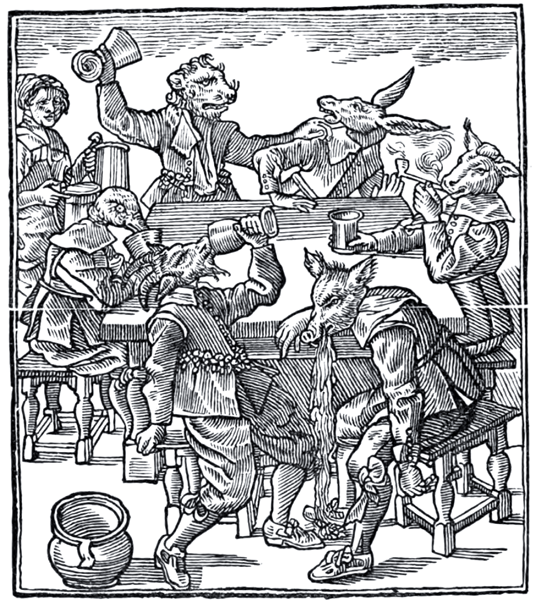
Roxburghe Ballads c1633

To generate a name, first roll 1d6

1 – 3 List of Colors
4 – 6 List of Actions

Then roll another 1d6

1 – 3 List of Animals
4 – 5 List of Birds
   6 List of Fantastic Beasts

List of Colors (Roll 1d8)

  1. Red
  2. Blue
  3. Green
  4. Yellow / Gold / Golden
  5. Brown
  6. Black
  7. White
  8. Gray / Silver

List of Actions (Roll 1d8)

  1. Laughing
  2. Dancing
  3. Sitting
  4. Drinking / Drunken / Hungry
  5. Singing / Roaring / Barking
  6. Sleeping
  7. Fighting / Rampant / Raging
  8. Jumping / Leaping / Running

List of Animals (Roll 1d12)

  1. Bull / Cow / Calf / Ox
  2. Bear
  3. Deer / Hind
  4. Lion / Leopard
  5. Boar  / Sow / Pig
  6. Badger
  7. Horse (Stallion, Mare, Foal, Pony)
  8. Dog (Fox, Hound, Wolf)
  9. Goat (Sheep, Ram)
  10. Rabbit (Hare, Coney)
  11. Weasel (Stoat)
  12. Beaver (Otter)

List of Birds (Roll 1d6)

  1. Rooster (Cock)
  2. Hawk
  3. Goose
  4. Owl
  5. Swan
  6. Seagull / Gull

List of Fantastic Beasts (Roll 1d6)

  1. Chimera
  2. Dragon
  3. Wyvern
  4. Unicorn
  5. Griffon
  6. Harpy


Click HERE for a free copy of these tables in PDF format.