Monday, August 28, 2017

Adventure Seed: The Village of Nusquam (Updated)


Article Updated August 27, 2026
New artwork, expanded article


Every campaign needs a solid jumping-off point—a place far enough from the seat of imperial power that trouble can brew unchecked, but well-equipped enough that low-level adventurers can patch their wounds, sharpen their steel, and spend their hard-won coin.

Tucked just off a secondary trade road lies Nusquam (pronounced Nus-kom or Nus-ka, derived from the old tongue meaning "nowhere"). It is a working settlement surrounded by untamed wilderness, making it an ideal base of operations for characters cutting their teeth from levels 1 through 4.

The settlement is presented intentionally semi-modular and un-keyed, giving the Game Master total freedom to match buildings to the map, drop in traveling merchants, or expand the outskirts as the campaign evolves.

The Settlement at a Glance


  • Population: ~250 permanent residents (mostly human, with a small diaspora of demi-humans).

  • Government: An informal council of village elders advised by local tradesfolk and the resident sage.

  • Defense: A modest muster of local militia (farmers, woodcutters, and apprentices with spears and leather jacks). When real trouble knocks, they look to capable travelers or the old wizard down the lane.

  • Economy: Timber, grain milling, wool, and trade goods passing through between major settlements.

Key Personalities & Locations


1. Grisvaldor the Sage

Role: Wizard, Scholar, and Campaign Anchor

Grisvaldor resides in a slightly crooked, ivy-draped cottage near the edge of town. A retired adventurer of eccentric habits, he acts as an informal advisor to the village elders and a reliable patron for hungry sellswords. While he has occasionally stepped up with fiery arcane force to defend Nusquam from border raids, he prefers to dispatch eager adventurers to gather rare reagents, investigate ancient ruins, or resolve peculiar disturbances.

2. Throdan’s Forge

Role: Blacksmith, Armorer, and Weapon Smith

A stout dwarven smith with an eye for quality iron and an uncanny ability to appraise common magical arms and armor (though cursed gear easily slips past his appraisal). Throdan married a human woman years ago; their daughters take after their mother—tall, buxom, and notoriously flirtatious. To keep young rakes and wandering sellswords from getting too bold around his daughters, Throdan challenges suitors to lift his massive shop anvil. Unknown to the locals, the anvil is secured to the bedrock beneath the floorboards by a concealed mechanical locking pin.

3. The Chapel of the Hearth & Brother Timmer

Role: Spiritual Care and Divine Magic

Brother Timmer is a plain-faced, deeply charismatic parish priest who tends to the spiritual needs of the hamlet. Capable of channeling low-tier divine blessings and healing spells, Timmer is well-liked by the villagers. Behind his pious exterior, he maintains a quiet fascination with the old ways and druidic lore, and rumors persist that he occasionally dons mask and hood to slip away into the woods during seasonal solstice celebrations.

4. The Willow & Root Apothecary (Bernadette)

Role: Herbalist, Healer, and Spell Component Supplier

Vivacious, sharp-witted, and of indeterminate middle age, Bernadette provides the village with poultices, salves, and basic curative magic. Mages can purchase common low-level spell components from her shop (she keeps enough on hand to supply two to three castings per week, but will gladly take custom orders). Bernadette shares an amicable rivalry with Brother Timmer over the townsfolk’s welfare—though frequent evening strolls and quiet tea shared between the two suggest a much warmer connection than either admits.

5. Binks’ Mill & Tinkery

Role: Grist Mill, Mechanical Repairs, and Specialty Gear

Affectionately known as "Binksy," this diminutive artisan is often mistaken for a short human, but carries distinct gnomish blood. He maintains the village water wheel, repairs complex machinery, and can fabricate or source delicate specialty tools (such as lockpicks and spring mechanisms). While Binksy lives an honest life and disdains common thievery, he knows how illicit locks operate and maintains old underworld contacts in the provincial capital for adventurers who need discrete introductions.

6. The Drunken Anchor (Dargo’s Tavern)

Role: Inn, Tavern, and Rumor Mill

A former corsair who won the establishment fair and square in a late-night game of cards, Dargo is a scarred, boisterous host who runs a clean and orderly taproom. He knows how to handle rowdy brawlers and appreciates reliable muscle. Dargo offers free lodging in the common room to adventuring parties willing to keep the peace, break up tavern scraps, and keep highwaymen off his supply wagons.

D6 Rumors & Adventure Hooks

d6Rumor / Hook
1Barrow Lights: Strange blue lanterns have been spotted dancing across the old burial mounds two leagues north. Grisvaldor is offering gold for soil samples taken from the mound summits.
2The Stolen Wagon: A shipment of high-grade bog iron bound for Throdan’s forge was ambushed along the river trail. Footprints suggest goblins, but the tracks lead suspiciously toward an abandoned limestone quarry.
3Masks in the Mist: Villagers whisper of hooded figures gathering at the standing stones at midnight. Brother Timmer claims it is harmless folk tradition, but Bernadette has been brewing extra burn salves in secret.
4Missing Cogs: Binksy’s master set of jeweler's files and a heavy brass gear from the mill were pinched overnight. He suspects a traveling peddler who fled south before sunrise.
5The Old Captain's Debt: A rough-looking crew of river rogues arrived at Dargo’s taproom, demanding payment on a debt Dargo claims was settled twenty years ago at sea. Bloodshed is brewing if cooler heads don't step in.
6Foul Water: The stream feeding the grist mill has run foul and bitter with black sediment, threatening the autumn milling. Something has stirred or taken up residence inside the upstream cavern system.

GM Advice for Running Nusquam

  • Keep the Map Un-Keyed: Place houses, barns, and shops where they best serve your campaign's immediate pacing.

  • Leave Room for Expansion: Keep four or five outlying farmsteads and cottages unassigned so you can drop in visiting alchemists, tax collectors, exiled nobility, or rival adventuring parties as the narrative demands.

  • Make It Home: Give the players a stake in the village early on—whether a loft above the barn, an abandoned storehouse to renovate, or simple respect earned by protecting the harvest. When danger threatens Nusquam later, the defense becomes personal.


Comments? Complaints? Questions? You can reach us by using our Contact Form in the upper right-hand corner of the page, or post your questions and comments below. We look forward to hearing from our readers.

Saturday, August 26, 2017

Rock-Paper-Scissors.. GO!

Rock, Paper, Scissors (R-P-S), has been around for centuries, possibly as far back as 200 BC. Every country, on every continent, has its own variation, but it's still basically the same game with the same rules. In a pinch, whether because you don't have dice or are playing in a car, R-P-S can be a fun and convenient way of deciding a gaming outcome. Yes, I'm aware that there are dice rolling apps for your phone, but you can't use your phone while driving, and sometimes you're trying to save those last precious few % of your dying battery.


Basic Rules - As If You Didn't Already Know.

One player counts out loud.. 1.. 2.. 3! and both players then "throw" out their chosen hand gesture.
  • Rock (Solid Fist) beats (crushes) Scissors
  • Paper (Flat Hand) beats (covers) Rock
  • Scissors (Two Fingers) beats (cuts) Paper


However, just as you can use R-P-S instead of dice, now you can use dice to substitute for hand gestures. Several manufacturers make Rock-Paper-Scissor dice, from d3, d6, to d12. 

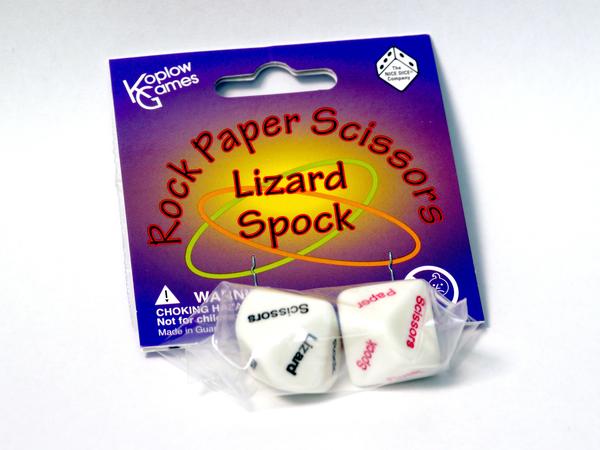
They also make d10 dice for the Rock-Paper-Scissor-Lizard-Spock variation of the game.

And, of course, you've always got this guy.


Rock-Paper-Scissors on Wikipedia.

Thursday, August 17, 2017

The Classic Dungeon Designer Series

A few years ago, I came across a set of four PDF files, the Classic Dungeon Designer's Netbooks, written by B. Scot "Kellri" Hoover. They were written for use with 1st edition Advanced Dungeons & Dragons, but are also largely compatible with any OSR rules based on that system.


#1 Monster Stat Block Reference is a compilation of stat blocks for monsters appearing in the game. They make finding essential combat information easier to reference without having to pull out all the Monster Manuals and Fiend Folio. Very handy.

#2 Spells Reference is a comprehensive list of all magic-user, illusionist, cleric, and druid spells published for AD&D, and includes notes and commentaries.

#3 Geomorphs provides a set of 60 basic geomorphs to help give the DM a quick way to map an unexpected cave, cavern system, collapsed ruin, or dungeon, that the players might find. Simple and easy to use.

#4 Encounters Reference is the crown jewel of the set. The book is so full of useful information, that a quick description wouldn't do it justice. It talks about, and expands upon, everything the Dungeon Master may need when creating encounters..

Chapter I: Men
  • NPC Assortments by Class (Clerics, Druids, Fighters, Paladins, Rangers, Magic-Users, Illusionists,Thieves, Assassins, Multi-Classed NPCs, Bards, Monks, Sages, 1st and O-level NPCs)
  • NPC Details
  • NPC Experience & Progression
  • NPC Boons & Hinderances
  • NPC Motivations
  • Dealing with NPCs
  • Hirelings
  • Standard Human Types (Bandits & Brigands, Berserkers, Border Patrols, Buccaneers & Pirates, Cavemen,Caravans, Dervishes & Nomads, Tribesmen, Guards & Watchmen,Pilgrims)
  • NPC Adventuring Parties
  • Spellbook Assortments (1st-18th+ Levels)


Chapter II: Demi-humans & Humanoids
  • Humanoid Ability Scores
  • Tribal Spellcasters
  • Humanoid Groups (Bugbears, Centaurs, Gnolls, Goblins, Hobgoblins, Kobolds, Lizardmen, Locathah, Ogres, Orcs, Sahuagin, Troglodytes, Trolls, Xvarts)
  • Demi-human Groups (Dwarves, Elves, Gnomes, Halflings, Mermen, Tritons)


Chapter III: The Underworld
  • Dungeon & Cavern Mapping Symbols
  • Wandering Monster Encounters (Dungeon Levels I~IX)
  • Dungeons
  • Doors & Locks
  • Gaols & Prisons
  • Ruins
  • Graves & Tombs
  • Caverns
  • Mines
  • Tricks & Traps
  • Animated Statues
  • Quests & Geases


Chapter IV: The Wilderness
  • Terrain by Hex
  • Weather
  • Random Encounters
  • Random Encounters by Terrain Type (Arctic, Sub-Arctic, Temperate, Tropical)
  • Dealing with Dragons
  • Encounters at Sea (Freshwater, Saltwater)
  • Extra-Planar Encounters
  • On the Road
  • Living Off the Land
  • Castles
  • Druidic Places


Chapter V: Settlements & Civilizations
  • Settlements
  • Inns & Taverns
  • Markets & Bazaars
  • Schools & Training Halls
  • Shops & Structures
  • Shrines & Temples
  • Underworld Guilds


Chapter VI: Treasures
  • Treasure Assortments by Level (Dungeon Levels I~IX)
  • Treasure Assortments by Type(Types A~Y)
  • Maps
  • Miscellaneous Treasures
  • Literature
  • Quick & Weird Magic Items


Chapter VII: The Campaign
  • Adventure Design
  • Friends & Foes
  • Exotic Times & Places
  • Deities & Demigods
  • Arcane Magic


Chapter VIII: Forms & Appendices
  • Appendix A Dice Conventions & Ranges
  • Appendix B Bibliography & Sources
  • Record Forms


Classic Dungeon Designer's Netbooks: (Good as of Aug 17,2017)
  1. Monster Stat Block Reference - CDD #1
  2. Spells Reference - CDD #2
  3. Geomorphs - CDD #3
  4. Encounters Reference - CDD #4
While you're at it, check out Kellri's blog, All Killer - No Filler. He has a lot of excellent material and more downloadable goodies than you can shake a Wand of Wonder at.

Friday, August 11, 2017

Going to the Birds

Duke Edwin Charlton was reknowned for his aviary. It was even said that ever since the Duke could walk that he longed to fly and be amonst the birds. They were a passion of his. A passion that young Nevan shared. The young servant loved to feed the small birds of paradise and the song birds that the Duke kept. But his favorites were the birds of prey that the Duke kept in the Mews. These were the ones that the Duke and his household would use to go hunting. Nevan loved to watch them spread their wings and glide high into the sky, circling and circling as they hunted. The Duke had many birds of prey. There were even some that Nevan could take hunting by himself, as long as he was catching something for the Dukes household to eat. 

He quietly walked amongst the falcons and the hawks, admiring the sharp talons as they sat on their perch, until he came upon the Duke's most prized falcon. It was much larger than the other Falcons and had snowy white feathers. Nevan knew that its plumage made him even more valuable. A pure white bird was the ultimate status symbol. It represented wealth and power. He dreamed of the day that he might be able to hunt with such a bird. With a heavy sigh, he walked over to a smaller hawk. While it wasn't as big, he could still see the powerful wings and sharp talons. He slid the leather glove on his hand and coaxed the bird on to it. The kestrel flapped its wings a few times as it got it balance. He felt the power from the wings and knew that this was still a fierce hunter.

"Come on, you. Lets go find some dinner for His Lordship." He said, as he opened the door and left for the open fields.


Falconry has been around for millennia, in all portions of the globe. It's been in Europe, the deserts, even on the islands of Japan. Until the invention of gunpowder, it was considered the sport of the upper class. So lets take a closer look into Falconry and how it can be applied to your campaigns.

The dictionary defines Falconry as, "The art of training hawks to hunt in cooperation with a person". Not much is known about where the art of Falconry started, but we do know that some of the earliest accounts come from Mesopotamia in roughly 2000 BC. From there we can only guess about how the sport was introduced to the rest of the world, but it spread all over the continents. It's a versatile sport that can fit just about any campaign setting.

While falconry was popular everywhere it went, it was also prohibitively expensive. The birds required special housing, food, and training gear, as well as an experienced trainer. It was because of the costs that Falconry was restricted to the nobility, and their servants, although some priests were allowed to keep falcons to help put food on the table at the monastery. The type of falcon an individual was allowed to use was determined by their social rank. Servants were allowed the smaller hawks, while a king could go hunting with a very large eagle. For creativity sake, you could probably include some mythological birds as well.

There were many birds that could be used for falconry, although not all of them were very practical. Restrictions of which falcons and hawks you could use based on your class. It was considered a crime to keep a bird that was outside your station. The lower classes were allowed kestrels and goshawks, while the upper class and royalty were gyr falcons, merlins, and even birds as big as vultures. The Book of St. Albans, written in 1486, gives a breakdown of what birds could be used and by what social class.


  • Emperor: Eagle, vulture, and merlin
  • King: Gyr falcon and the tercel of the gyr falcon
  • Prince: Falcon gentle and the tercel gentle
  • Duke: Falcon of the loch
  • Earl: Peregrine falcon
  • Baron: Bustard
  • Knight: Sacre and the sacret
  • Esquire: Lanere and the laneret
  • Lady: Marlyon
  • Young man: Hobby
  • Yeoman: Goshawk
  • Poor man: Tercel
  • Priest: Sparrowhawk
  • Holy water clerk: Musket
  • Knave or servant: Kestrel

It should probably be noted that not all types of vultures hunt, so they can't really be used for falconry. The Falcon Gentle, and the Falcon of the loch, are most likely different versions of the Peregrine Falcon. There is some debate about the Bustard. Some think that it might be a Buzzard, which isn't really a bird of prey. Others think that it might be a bird that can't be identified, something of an unknown lineage. The Sacre, or Sakers, were imported from abroad and were unlikely for a knight to have, unless they were wealthy, or had traveled afar.


Most hawks were trained when they were young or from the time they were hatched. It was essential to have a good trainer. They were responsible for teaching it to fly to a persons hand, getting it used to being around humans, and for hunting prey. The birds require constant attention or they become wild and unreliable, so a trainers work is never done. The common tools they used for training were the hood, jesses, bells, and lures. Jesses are the leather straps that go around the ankles and bells were often attached at the ankles so that a falconer could listen and keep track of the falcon.

As the sport grew, a good Falcon became worth it's weight in gold. If the bird was pure white it was worth even more. There are cases in history where falcons were used to pay ransoms or given as diplomatic gifts to improve relations. They were so valuable that laws were put in place to discourage people from harming the birds. Destroying falcon eggs or harming a bird could result in imprisonment. Killing or stealing a bird could result in death. A good falcon was a status symbol and something to be protected. Nobles often traveled with their falcons in order to show them off at grand hunting parties.

All in all, falconry is a pretty easy sport to work in to any campaign setting. The sport died off for a while with the proliferation of firearms, but it's been revived on just about every continent lately. Most people think of it as a sport that is just limited to medieval campaigns, but it can be set to any location. You don't even have to limit yourself to local birds. Falcons and Hawks were often imported, exported, and gifted. You can even introduce fictional ones. Be as creative as you wish. It's sure to add some extra authenticity to any campaign.


Suggested Further Reading:

Falconry on Wikipedia - Here
Ancient & Medieval Falconry: Origins & Functions in Medieval England (Includes terms and vocabulary of the sport) - Here
Falconry in the Middle Ages - Here
Falconry is an Art - PBS - Here


About the Author


Today's article is by our special guest contributor, Rachel Williams. Rachel is a manager at a popular national food franchise, and long-time gamer in both video and table-top media. She is an avid history buff and can often be found glued to the PBS channel and streaming documentaries.. usually far later into the night than she should.

She lives in Upstate New York, with her adorable cat and equally adorable husband (the Editior).