Showing posts with label DIY. Show all posts

Saturday, October 7, 2017

Name That NPC - List 1

Here is a simple 1d50 list of NPC names, to be used for inspiration, or whatever other reason you need.


  1. Thane the Outcast
  2. James of the Castle Warden
  3. Ernst Gigantesson
  4. Galtar Hempseed
  5. Cho Rempol
  6. Nestrum the Nithling
  7. Mimicus the Mirage
  8. Puzzo Ale Sodden
  9. Darlun Ninefinger
  10. Zinn the Most Brazen
  11. Fost Ghostwalker
  12. The Silent Master
  13. Mourn Tearblood
  14. Dlareg of the Broken Chain
  15. Donal the Triumphant
  16. Hamurak of the Golden Dawn
  17. Zula of the Silver Twilight
  18. Sonja the Necrophant
  19. Mantzar the Frank
  20. Kresto the Amazing
  21. Mabry the Mad
  22. Procuron the Sentinel
  23. Kant Stantcha
  24. Bast Miltaur
  25. Lupo the Lycan Hunter
  26. Prego the Prestigious
  27. Thom, Son of Iron
  28. Dyzon Legolos
  29. Zoltan Halfblood
  30. Prince Kespeare
  31. Kronen of the Borderlands
  32. Porchette the Clever
  33. Marazon the Unblessed
  34. Fegnar the Unholy
  35. Tesarat of the Unseen Path
  36. Adraxus the Forgotten
  37. Castus the Egregious
  38. Hestia Bloodthorne
  39. Negan the Reanimator
  40. Seriff the Dominant
  41. Quethos of Evergreen
  42. Horezon, Servant of Marduk
  43. Thesolon the Veiled
  44. Gesbury Greyhand
  45. Fenthoc Thorne
  46. Athelos the Scryer
  47. Rathanon the Undying
  48. Lemmon Zhello
  49. Cinnamon
  50. Krusti O'Toole

Friday, October 6, 2017

Optional Rules: Trade Goods - Part One

Trade goods can usually be traded or bartered at 80 to 100% of full value. These goods are accepted anywhere there is a market for them. Ore grades affect trade values.


Metal, Price Per Pound:
1sp        Iron
4sp        Lead
5sp        Copper
1gp        Tin
5gp        Silver
5gp        Bronze
25gp      Electrum (White Gold)
50gp      Gold
500gp    Platinum

Metals are often smelted into ingots of various sizes and weights.
Ore values are different from smelted metal ingots. Ore is raw material, still mixed with impurities and sells for approximately 40% to 75% value. 


Grades of Ore:
40-45%                 Cut-Off Grade Ore, below this level no longer economical to mine
50-55%                 Mid-Grade Ore
60-65%                 Market Grade Ore
70-75%                 High Grade


Roll 1d8 to determine Ore Grad / Trade Value.

1
40%
5
60%
2
45%
6
65%
3
50%
7
70%
4
55%
8
75%


Grains, Produce, and Fruits:

1cp        one pound of wheat, or millet
5sp        one bushel of wheat, or millet (50 pounds)
2cp        one pound of flour, or rice
2sp        one bag of flour, or rice (10 lbs)
2cp        one pound of dried beans
1sp        one bag of dried beans (5 lbs)
3cp        one pound of corn (2 - 3 ears)
2gp        one bushel of corn (70 pounds)
2cp        one pound of onions (3 small, 2 medium, or 1 large)
11sp      one bushel of onions (57 pounds)
3cp        one pound of potatoes (3 average, 10 small)
3sp        one bag of potatoes (10 pounds)
2cp        one pound of apples (4 small, 3 medium, or 2 large)
8sp        one bushel of apples (40 lbs)
2cp        one pound of peaches (3)
1gp        one bushel of peaches (50 lbs)
1gp        one pound of cinnamon, or sugar
2gp        one pound of ginger, or pepper
5gp        one pound of salt
15gp      one pound of saffron, or cloves


Luxury Items:
5sp        one pound of tobacco (15-25 leaves)
8sp        one pound of mild pipeweed / hemp
1gp        strong pipeweed (2-3 cigarettes)
10gp      Black Lotus (the good stuff)
2gp        Haga (not the good stuff)


I'm looking to improve this article, please comment or send feedback.


Optional Rules: Livestock
Optional Rules: Fur Trade

Thursday, September 7, 2017

DM's Toolbox: Random Dice Tables

Once again we'll be looking at dice rolls, but dice rolls of a different sort. Today's topic is using random die rolls to help stimulate your brain when you get stuck for inspiration. Exact interpretation of the die roll isn't necessarily important as long as it gives you a point of reference to start with. These tables go along very well with Redcap's Universal Table.
 

Door/Container:
  1. Open
  2. Stuck
  3. Blocked
  4. Trapped
  5. Locked
  6. Locked and Trapped

Treasure:
  1. Minor Coinage
  2. Gold
  3. Gems
  4. Potion / Scroll / Other Minor Magic Item
  5. Weapon / Armor
  6. Magic Item

Weather:
  1. Sunny
  2. Partly cloudy
  3. Rain
  4. Thunderstorm
  5. Whirlwind
  6. Snow / Blizzard

Trap:
  1. Trap Door / Pit
  2. Falling / Crushing
  3. Spiked Pit / Walls
  4. Projectiles
  5. Guillotine / Scythe
  6. Gas / Spray

Armor / Clothing:
  1. Head
  2. Torso
  3. Feet
  4. Hands
  5. Arms
  6. Legs

Time of Day:
  1. Early Morning
  2. Late Morning
  3. Noon(ish)
  4. Afternoon
  5. Early Evening
  6. Late Evening

Encounter Difficulty:
  1. Easy
  2. Easy
  3. Easy
  4. Equal
  5. Equal
  6. Tougher

Roadway / Corridor:
  1. Obstacle / Doorway (Mud, Fallen Rocks, etc)
  2. Intersection (Tee or Cross)
  3. Left Turn
  4. Right Turn
  5. Straight
  6. Incline / Decline (Hill Up or Down, Stairs, Ladder)

Saturday, September 2, 2017

DM's Toolbox: Quick Tavern & Inn Name Generator

A quick search online will reveal dozens, if not more, name generators for taverns and inns. These lists aren't uncommon or hard to find, but most all of them aren't public domain, or free to use in your own products. That's where this article comes in. You are free to use, alter, and publish these tables as long as you give credit to myself, Gerald "Redcap" Williams.

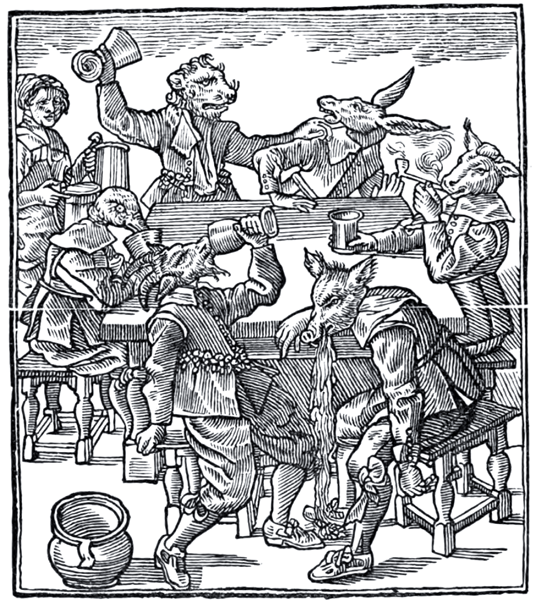
Roxburghe Ballads c1633

To generate a name, first roll 1d6

1 – 3 List of Colors
4 – 6 List of Actions

Then roll another 1d6

1 – 3 List of Animals
4 – 5 List of Birds
   6 List of Fantastic Beasts

List of Colors (Roll 1d8)

  1. Red
  2. Blue
  3. Green
  4. Yellow / Gold / Golden
  5. Brown
  6. Black
  7. White
  8. Gray / Silver

List of Actions (Roll 1d8)

  1. Laughing
  2. Dancing
  3. Sitting
  4. Drinking / Drunken / Hungry
  5. Singing / Roaring / Barking
  6. Sleeping
  7. Fighting / Rampant / Raging
  8. Jumping / Leaping / Running

List of Animals (Roll 1d12)

  1. Bull / Cow / Calf / Ox
  2. Bear
  3. Deer / Hind
  4. Lion / Leopard
  5. Boar  / Sow / Pig
  6. Badger
  7. Horse (Stallion, Mare, Foal, Pony)
  8. Dog (Fox, Hound, Wolf)
  9. Goat (Sheep, Ram)
  10. Rabbit (Hare, Coney)
  11. Weasel (Stoat)
  12. Beaver (Otter)

List of Birds (Roll 1d6)

  1. Rooster (Cock)
  2. Hawk
  3. Goose
  4. Owl
  5. Swan
  6. Seagull / Gull

List of Fantastic Beasts (Roll 1d6)

  1. Chimera
  2. Dragon
  3. Wyvern
  4. Unicorn
  5. Griffon
  6. Harpy


Click HERE for a free copy of these tables in PDF format.

Wednesday, August 30, 2017

Redcap's Universal Table For Almost Everything

Longtime players of D&D will most certainly remember the original "Reaction Table", which was also used in the first edition of Gamma World, by the way. This table utilized the simplified mechanic of rolling two standard 6-sided dice, adding the total, and comparing to the chart. The beauty and simplicity of this minor table was never lost on me, and followed me throughout 39 years of gaming. Even when playing other game systems that didn't use a similar device, or have rules governing a particular circumstance, I would default to grabbing two dice and wing it. Not only has this kept the action moving along without interruption, but has kept my behind-the-screen decision making fairly consistent. Players can often sense when dice rolls are arbitrarily random, which does much to breed mistrust.

Back in July, I wrote an article on using Decision Dice ("Using The Dice to Improvise"), that touched on the subject of using random dice rolls during games, but only gave generic guidelines. The primary focus of that article was on showcasing Decision Dice. This article covers my personally preferred approach, using only two normal dice.

I prefer this method because rolling two dice allows for 36 random combinations, for 11 possible unmodified results, which I then further break down into 5 categories of severity. While this might appear very math intensive, it's actually quite simple in practice. The odds and percentages have only been included for those who are interested in how the system is derived.

2d6 Odds and Probabilities


My system uses five successive levels of possible outcome, ranging from the worst to best possible results. The Game Master may apply any bonuses or penalties depending on situational conditions, precautions being taken, quality of materials being used, a particularly favorable (or unfavorable) character trait the character might possess, etc.


2d6
Outcome
Probability
2
Unfavorable, Complication
3%
3-5
Unfavorable
25%
6-8
Neutral
44%
9-11
Favorable
25%
12
Favorable, Beneficial
3%
  • 2 - Unfavorable, Complication - Not only don't things look good, but this result will further complicate the situation.
  • 3-5 - Unfavorable - Things don't go well, but aren't overly complicated by further misfortune.
  • 7-9 - Neutral - The situation is neither favorable, nor unfavorable.
  • 10-11 - Favorable - Things fall into place in favor of the situation.
  • 12 - Favorable, Beneficial - Not only are things good, but are further beneficial to the situation

Here are a few examples of possible outcomes, depending on the situation being determined:

Encounter Reaction:
  • Attacks immediately
  • Hostile, will probably attack unless the situation changes
  • Uncertain, guarded behavior, but willing to parley
  • Not hostile, possibly friendly
  • Peaceful, makes overtures of friendship in good faith
Daily Weather
  • The worst possible type of extreme weather for the climate, season, and region, be it a typhoon, massive blizzard, sand storm, whatever!
  • Bad weather, possibly dangerous depending on prevailing climate
  • Typical weather conditions
  • Favorable weather conditions
  • Best possible weather conditions
Character Attempting An Action:
  • Not only has the action failed, but the proverbial Fickle Middle Finger of Fate makes an appearance!
  • The action fails, possibly resulting in further problems (alarm goes off, etc)
  • The character succeeds, but only just
  • Clear success, fortune smiles upon the character
  • Outstanding! Not only does the character succeed, but gains an advantage or added benefit doing so
Success of A Project: (for example -  crafting a magic item)
  • Dismal failure! Not only are all materials ruined and wasted, but research notes may have been compromised (accidentally set on fire, etc)
  • Failure. Only the natural results of failing may occur as a result
  • Success. The item is crafted and functional
  • Well done. The item is well crafted as though by a master craftsman
  • Eureka! The item is an exceptional specimen of its kind, possibly with an unforeseen benefit

Optional Rule - Rolling Doubles:

Rolling doubles results in hard preset results that supersede any modifiers that may have been applied to the dice roll. This is done to ensure nothing is guaranteed to be an automatic success or failure.


2d6
Outcome
Odds
1,1
The Jolly Roger!
1 in 36
2,2
Consequences
1 in 36
3,3
Automatic Failure
1 in 36
4,4
Automatic Success
1 in 36
5,5
Beneficial
1 in 36
6,6
Outstanding!
1 in 36

  • The Jolly Roger! - Named after a particular set of dice I had that replaced the 1 with a skull and crossbones.
  • Consequences - Unfavorable outcome, resulting in possible consequences (alarms, broken equipment, etc)
  • Automatic Failure - Despite your best efforts, you just fall short. You may attempt a re-do
  • Automatic Success - Yes! Well done
  • Beneficial/Excellent - You make this $@#! look good
  • Bonus! - You succeed beyond expectations, and may enjoy an additional unexpected bonus

Friday, August 4, 2017

Audacious Adversaries: The Knights of the Blackbriar (Updated)

The Temptation of Prior Kostan Armbach


Updated August 27th, 2026
New artwork and revised article

Few mercenary bands in the realm carry a reputation as grim, enigmatic, and fiercely effective as the Knights of the Blackbriar. Once formally known as the Benevolent Order of the Revered Blackbriar Priory, this ancient brotherhood has traded its sacred monastic vows for sellsword steel, extortion, and royal intrigue.

Whether encountered as cold-blooded mercenaries guarding a corrupt baron's vault, rival treasure hunters scouring a forbidden tomb, or desperate guardians protecting a horrifying secret, the Blackbriars make formidable, morally complex adversaries for any campaign.

The Fall of the Priory


During the cataclysmic Runic Wars, the Blackbriar Priory was entrusted with a terrible and holy duty: the recovery, quarantine, and safekeeping of malevolent artifacts wrested from the defeated Mages of Astrogoth. These tainted relics—whispered to be gifts from unearthly horrors—warped the minds of ordinary mortals. For decades, the pious knights bore this burden in silence, locking the blasphemies away in subterranean vaults beneath their fortified chapterhouses.

Trouble began when the wars concluded. High church elders and covetous nobles demanded access to the vaults to "verify" the relics' containment. The leader of the Order, Prior Kostan Armbach, flatly refused, decreeing that even a glance at the relics would spread spiritual rot, and that their resting places must remain an eternal secret.

His refusal sparked paranoia and greed. Church factions and rival lords launched a smear campaign, accusing the knights of practicing dark sorcery and worshiping the very idols they had sworn to bury. The crown seized the Order's lands, ransacked their priories, and subjected dozens of knights to brutal, politically rigged inquisitions.

Yet, despite torture and execution, not a single artifact was ever recovered.

The surviving remnant broke their vows and went underground. Over generations, the holy order devolved into a ruthless mercenary company, capitalizing on their dark reputation, military precision, and the terrifying mystique of their lost reliquaries.

Appearance & Tactics


"Nigrae Spini Milites" translation "Knights of the Black Thorn / Blackbriar."


The modern Blackbriar is a grim, disciplined combatant. They favor heavy, utilitarian plate armor deliberately chemically blackened or scarred by battle, worn beneath faded grey or cream-colored surcoats embroidered with the Silver Briar.

  • Cold Discipline: They fight without battle cries, relying on synchronized shield walls, heavy crossbow fire, and brutal flanking maneuvers.

  • The Blackbriar Oaths: While they take gold for their swords, they adhere strictly to a brutal internal code. A Blackbriar never breaks a signed contract—unless a superior contract involves the retrieval of an ancient relic.

  • The Whisper of Corruption: Veteran knights often carry lead-lined lockboxes or iron-banded pouches at their hips, never opened in the presence of outsiders.

D4 Truths: Why Did the Priory Fall? (GM's Choice)


d4The Truth Behind the Legend
1Martyrs of the Secret: The Blackbriars remained pure. They accepted dishonor and exile solely to keep the cataclysmic relics of Astrogoth out of the hands of greedy princes and corrupt pontiffs.
2Rotten to the Core: Prior Armbach fell to the whispers of the relics decades before the trials. The modern mercenary company is merely a front, using sellsword gold to feed dark rituals and restore the Astrogoth dominion.
3Empty Vaults: The artifacts were destroyed centuries ago. The Blackbriars maintain the myth of their dread secret simply to intimidate foes and extort paranoid rulers.
4The Living Curses: The relics were never objects—they were cursed bloodlines. The Blackbriars are sworn to hunt, protect, or eliminate the living heirs of Astrogoth before their power awakens.

D6 Lost Relics of Astrogoth


d6RelicDread Property
1The Crying TorcA twisted collar of black iron that continually weeps bitter oil; silences divine magic within 30 paces.
2The Cinder NailA six-inch bronze spike; driving it into soil renders an acre permanently barren but repels undead entirely.
3The Vitrified HeartA pulsing chunk of obsidian that allows the bearer to speak with dead mages, at the cost of bleeding from the eyes.
4The Shroud of Weeping StarsA moth-eaten silk drape that makes the wearer invisible to extraplanar beings, but draws ravenous beasts.
5The Cleft Bell of AstrogothWhen rung, creates an unnatural vacuum of sound that shatters non-magical glass, crystal, and ceramic.
6The Iron CensusA lead-bound ledger that automatically records the true names of anyone who dies by violence within five leagues.

D6 Adventure Hooks & Encounters


d6Encounter / Hook
1The Toll of Iron: A squad of Blackbriars has seized a crucial river bridge, demanding an exorbitant "relic inspection tithe" on all passing caravans.
2The Broken Tomb: The PCs are clearing an ancient barrow when a Blackbriar strike team breaches the burial chamber from an adjoining tunnel, demanding the party surrender an ornate urn.
3The Inquisitor's Bounty: An elderly prelate hires the party to infiltrate a Blackbriar encampment and steal a ciphered ledger containing the locations of the original sealed vaults.
4Unlikely Allies: Cornered by a terrifying eldritch horror in the deep woods, the PCs are rescued by a silent contingent of Blackbriar veterans wielding heavy incendiary flails.
5The Deserter's Tale: A young Blackbriar mercenary flees to the PCs' tavern, claiming his captain opened an iron reliquary in camp and the entire command staff went mad overnight.
6The Contract Breaker: A local lord hires the party to defend his manor against the Blackbriars—only for the party to discover the lord secretly stole an Astrogoth relic from the knights.


Comments? Complaints? Questions? You can reach us by using our Contact Form in the upper right-hand corner of the page, or post your questions and comments below. We look forward to hearing from our readers.